Designing for Solitude: The Architecture of Retreat
How architectural intention and landscape psychology combine to create spaces that restore clarity and calm.
In an age of constant connectivity, the architecture of retreat demands a fundamentally different approach. Our design philosophy begins with a single question: how does a structure disappear into its landscape while simultaneously framing it?
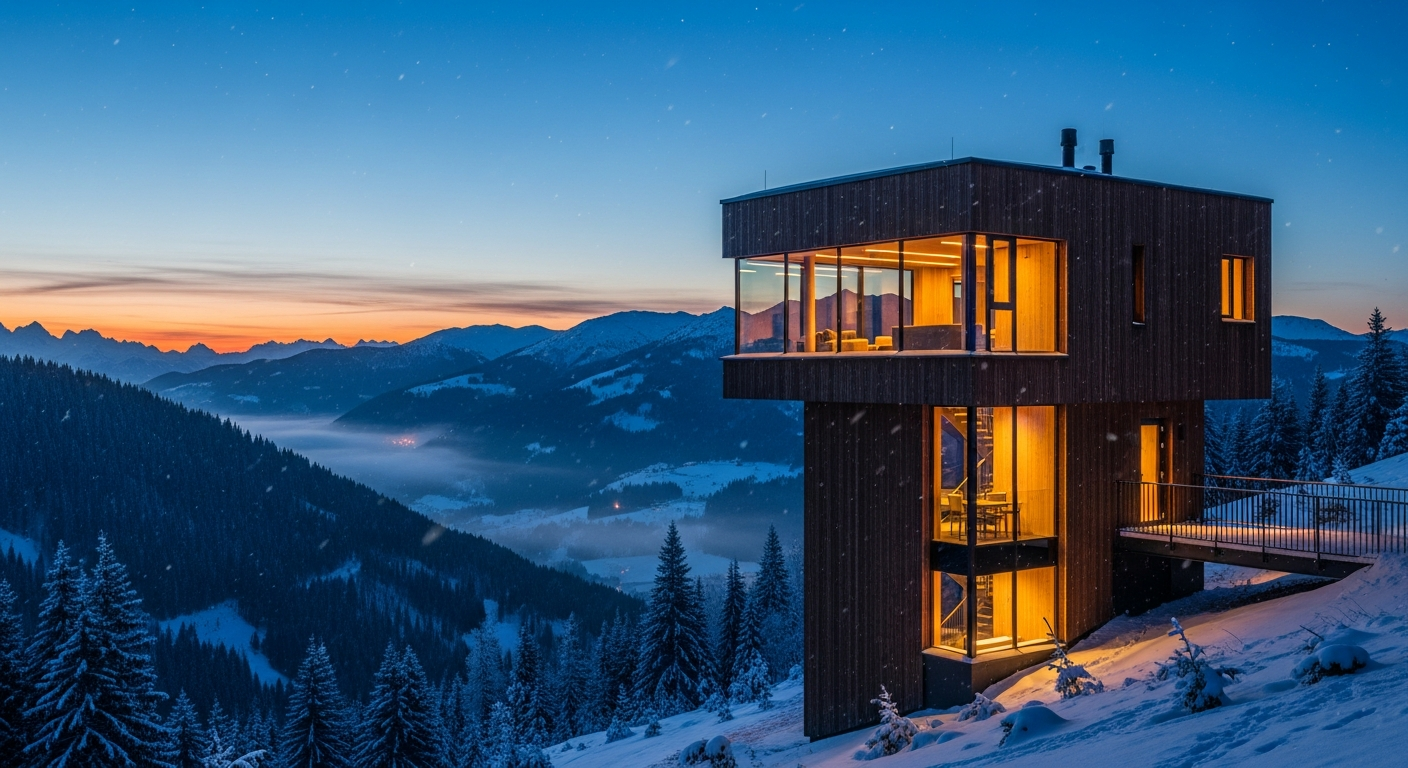
The answer lies in transparency, materiality, and a deep respect for the topography that existed long before we arrived. Each Lookout Tower is oriented to capture the most compelling views while minimizing its footprint on the land.
The Psychology of Space
Research in environmental psychology consistently demonstrates that exposure to natural landscapes reduces cortisol levels, improves cognitive function, and promotes a state of reflective calm. Our towers are designed to amplify these effects through careful spatial sequencing.
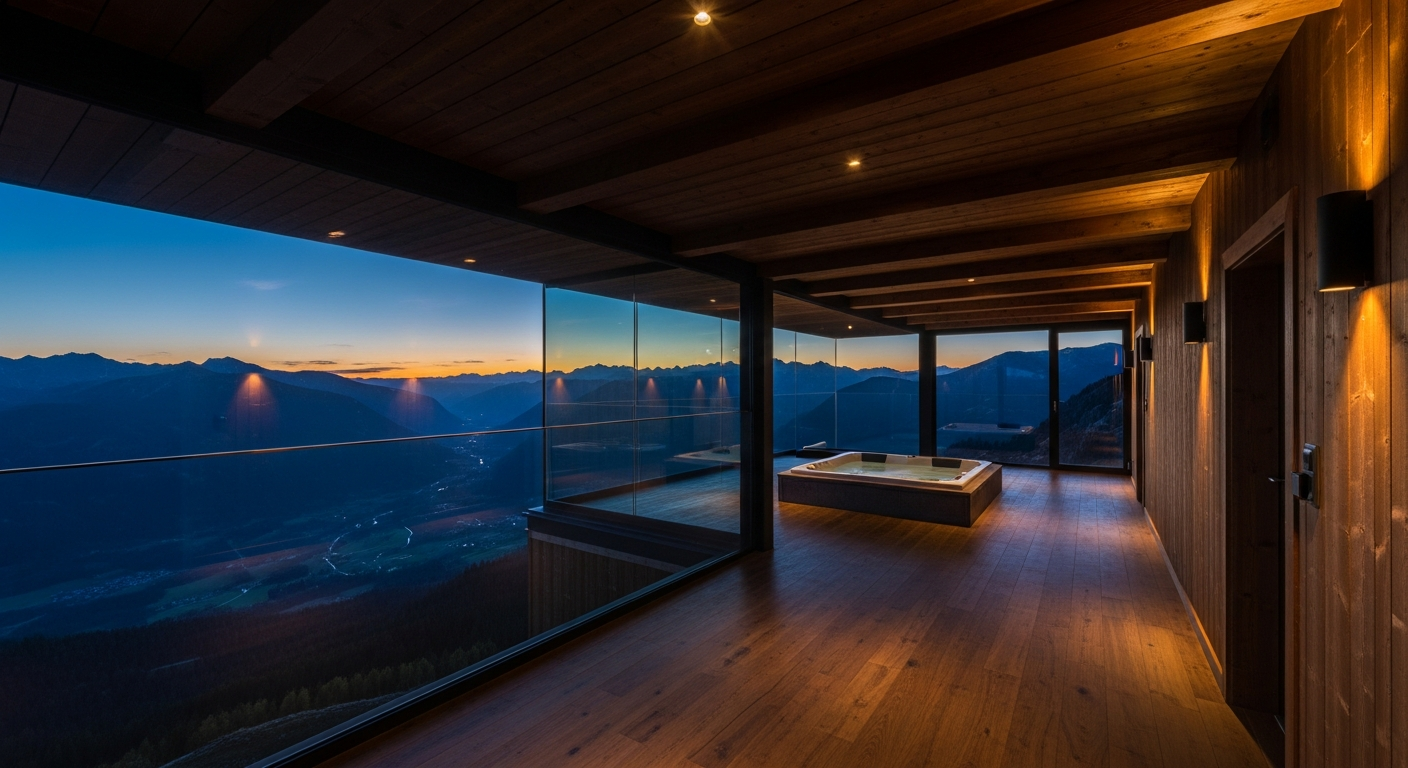
Upon arrival, visitors move through a deliberately compressed entry sequence — a low-ceilinged vestibule of warm timber that creates a sense of enclosure. As they ascend, the spaces open progressively, culminating in the panoramic observation level where floor-to-ceiling glazing dissolves the boundary between interior and exterior.
This compression-to-release sequence is borrowed from classical Japanese architecture, where the transition from a narrow garden path to an expansive tea room creates a moment of perceptual shift. In our towers, this shift is vertical rather than horizontal, using height as a tool for psychological transformation.
Landscape as Architecture
We never build to compete with a view. Instead, we build to curate it. Each tower is sited through a rigorous process that considers sun path, prevailing winds, seasonal vegetation, and the narrative arc of the landscape throughout the day.
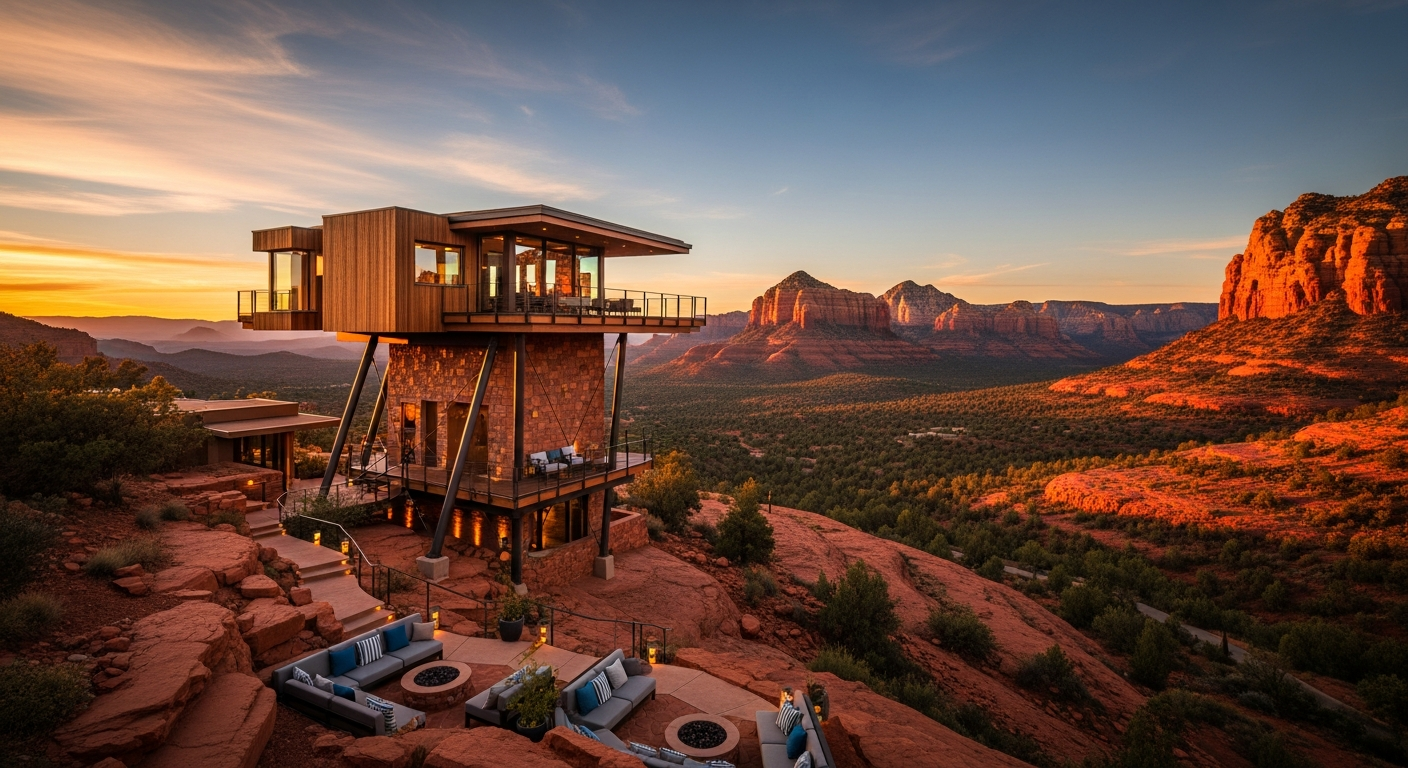
In Sedona, this means orienting the primary glazing toward Cathedral Rock, where the iron-rich sandstone shifts from amber to deep crimson as the sun tracks west. In Big Sur, it means positioning the tower to capture the fog line as it rolls across the coastal mountains each morning — a spectacle that transforms the interior into a space above the clouds.
The result is architecture that doesn't just sit in a landscape — it performs with it. Every hour brings a different quality of light, a different composition of sky and terrain. The building becomes a frame for an experience that changes continuously and can never be fully predicted.
Designing for Silence
Acoustic design is one of the most overlooked aspects of retreat architecture. In conventional buildings, mechanical systems, road noise, and the hum of appliances create a constant background frequency that the brain must filter. Our towers eliminate this entirely.
Triple-glazed panels with asymmetric air gaps reduce exterior noise by 45 decibels. Mechanical systems are housed in isolated, vibration-dampened enclosures below the living space. Even the plumbing is designed to minimize water hammer and flow noise.
The result is a space where you can hear the wind change direction, the first drops of rain on glass, or the distant call of a red-tailed hawk. Silence, in this context, isn't the absence of sound — it's the presence of the sounds that matter.