Red Rock Foundations: Building in Sedona
The engineering challenges and geological discoveries behind our Sedona tower — from red rock foundations to desert-adapted climate systems.
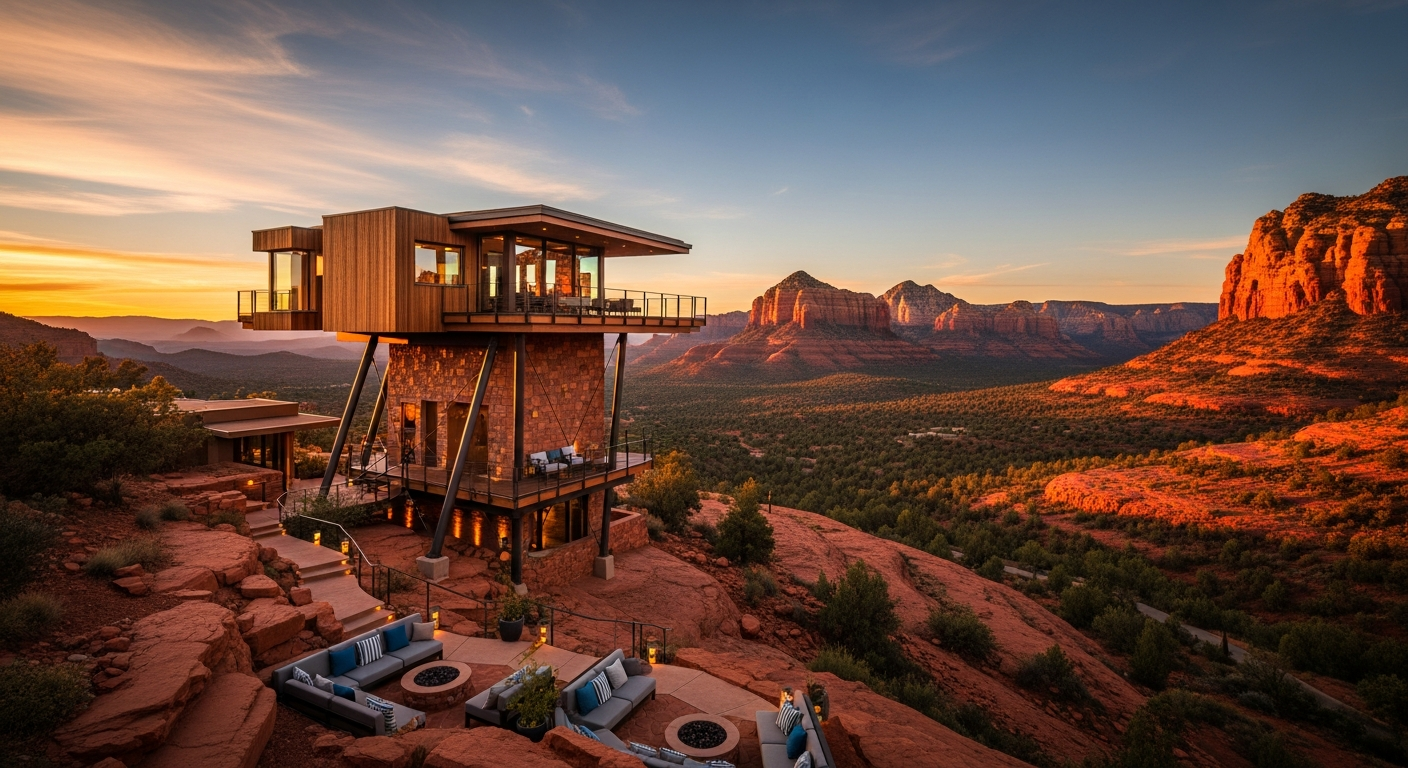
Sedona's geological complexity presented both the greatest challenge and the greatest inspiration for our first desert tower. The iron-rich sandstone formations that define the region demanded a structural approach that could anchor safely while treading lightly.
Working with local geologists and indigenous land stewards, we developed a foundation system that distributes load across bedrock without conventional excavation. The result is a tower that appears to grow from the landscape itself.
Reading the Geology
Before a single line was drawn, our team spent six months studying the site. Core samples revealed three distinct geological layers — a top stratum of weathered Schnebly Hill sandstone, a middle band of dense Supai formation, and a deep base of Redwall limestone that has remained stable for 340 million years.
Traditional construction would have required blasting through the upper layers to reach stable bedrock — a process that would have permanently scarred the landscape. Instead, our engineers developed a micro-pile system that threads through natural fracture lines in the sandstone, anchoring to the Supai layer without disrupting the surface geology.
Desert Climate Systems
The Sonoran Desert presents a thermal range of over 50 degrees between summer highs and winter lows. Our climate strategy uses the tower's vertical form as a natural ventilation engine. Cool air enters through low-level intakes, rises through the central shaft as it warms, and exhausts through automated vents at the crown.
This stack-effect ventilation reduces cooling loads by 40% compared to conventional HVAC. During the mild shoulder seasons — when Sedona is at its most spectacular — the tower can operate entirely without mechanical climate control.
Color and Context
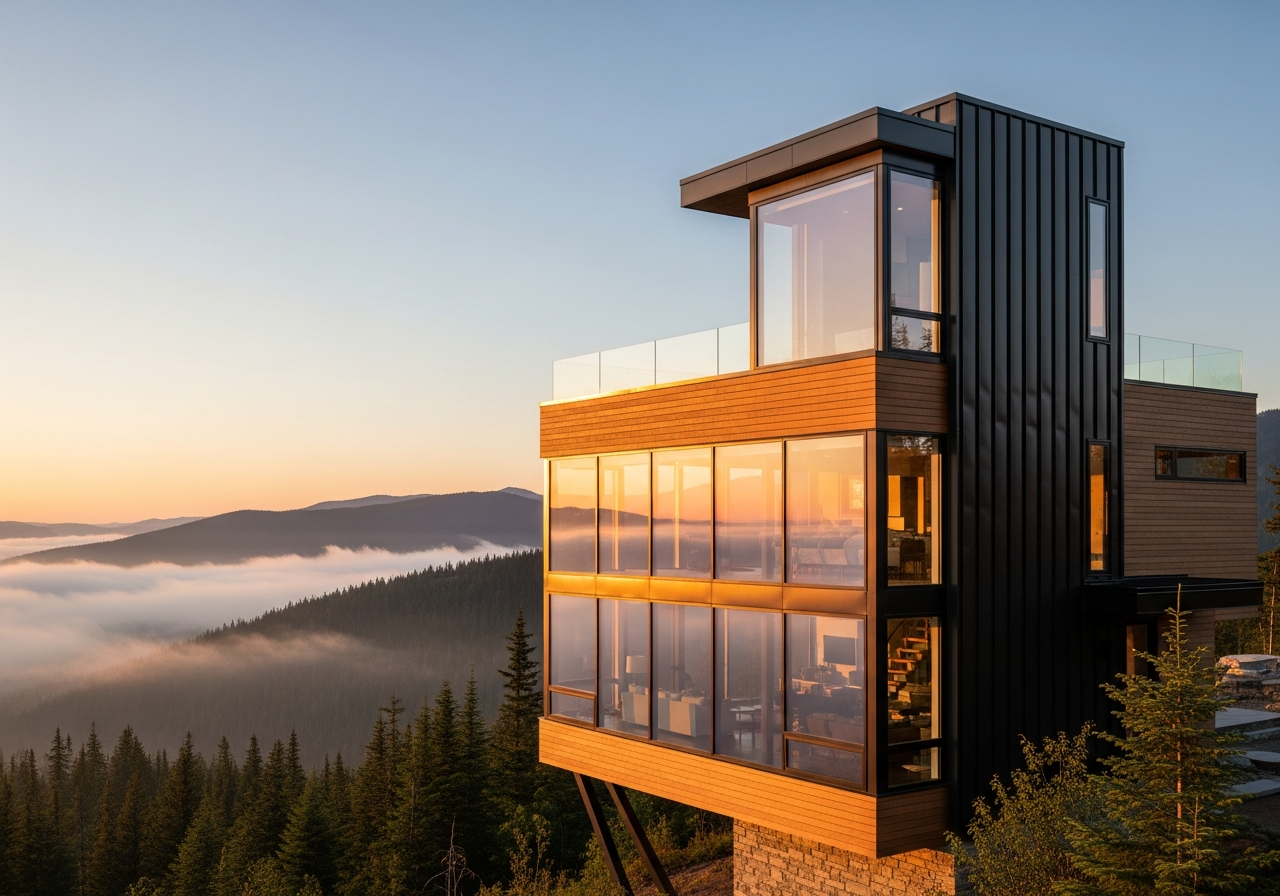
Every exterior material was selected to complement the red rock palette. The steel structure uses a custom Corten finish that develops a patina mirroring the oxidized iron in the surrounding sandstone. Timber elements are treated with a natural iron-oxide stain. Even the glass carries a subtle warm tint that prevents the building from reading as a cold, foreign object against the landscape.
The effect is most dramatic at golden hour, when the tower and the formations behind it share the same warm spectrum. Guests consistently describe the moment when the distinction between building and geology blurs as one of the most memorable aspects of their stay.