Off-Grid by Design: Our Sustainable Systems
How we engineer complete energy independence, water self-sufficiency, and minimal environmental impact into every tower.
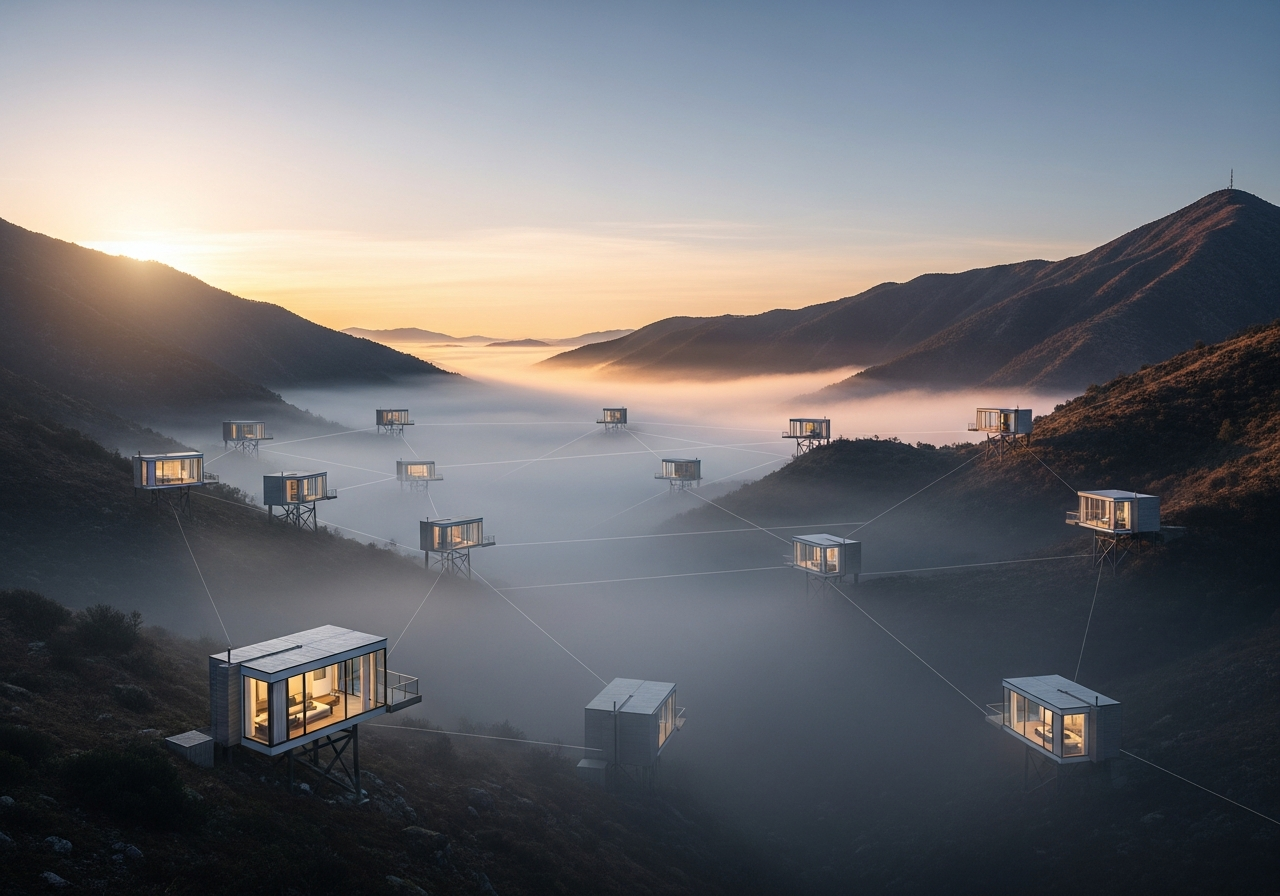
Every Lookout Tower operates independently of municipal infrastructure. This isn't a limitation — it's a core design principle. Our off-grid systems include photovoltaic arrays sized for year-round energy independence, rainwater harvesting with multi-stage filtration, composting waste systems, and passive heating and cooling strategies that reduce energy demand by 60% compared to conventional construction.
Energy Independence
Each tower carries a photovoltaic array sized at 150% of projected peak demand. The oversizing is intentional — it provides a buffer for cloudy periods and allows excess energy to be stored in a lithium iron phosphate battery bank rated for 20 years of daily cycling.
The system is paired with a real-time monitoring dashboard that tracks generation, consumption, and storage levels. Owners and guests can see exactly how much energy the building is producing and using at any moment. During peak summer months, most towers generate three to four times what they consume.
Water Systems
Water self-sufficiency is achieved through a combination of rainwater harvesting, snowmelt collection, and deep-well access where geology permits. All collected water passes through a four-stage filtration system: sediment filter, activated carbon, UV sterilization, and mineral rebalancing.
The result is water quality that consistently exceeds EPA standards for potable water. Greywater from sinks and showers is processed through a constructed wetland system that returns clean water to the local watershed.
Thermal Performance
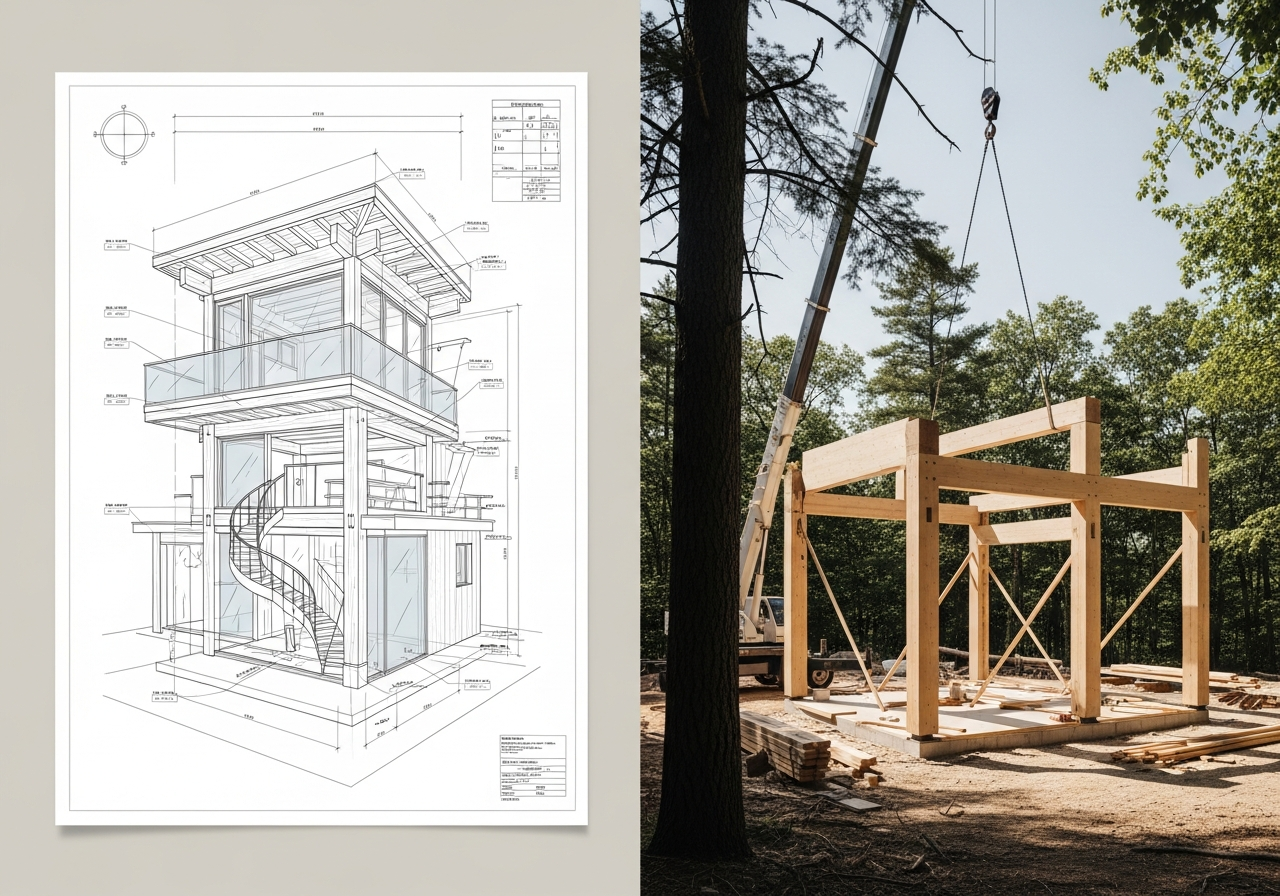
Our towers achieve a thermal envelope performance of R-45 in walls and R-60 in the roof — roughly triple the requirement for conventional residential construction. This extreme insulation, combined with heat-recovery ventilation and the stack-effect cooling described earlier, means the towers maintain comfortable temperatures with minimal energy input.
In the depths of a Colorado winter, when exterior temperatures drop to -20°F, the interior stabilizes at 68°F with only supplemental radiant floor heating. The thermal mass of the CLT structure acts as a heat battery, absorbing solar gain during the day and releasing it slowly through the night.